
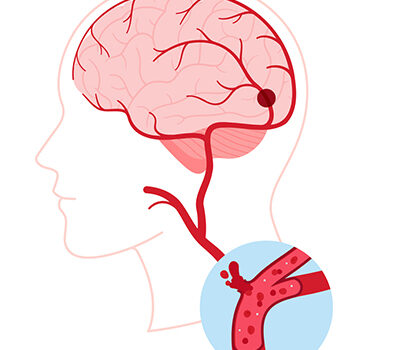

When caring for patients suffering from a stroke, staff often focus on physical issues, yet post-stroke patients often have emotional or behavioral changes as well. It is important for staff of home health agencies to understand how a stroke can affect patients’ psychosocial well-being. By recognizing the multi-faceted impacts of a stroke, the healthcare team can work together to provide the necessary support and care to promote recovery and improve the patient’s quality of life. This article will discuss practical strategies the nurse leader can use to help home health staff address psychosocial well-being when caring for patients who have suffered a stroke.
Why Changes in Personality Occur
Personality and behavioral changes in patients after a stroke are beyond the patient’s control; they occur because the stroke has damaged brain cells. Such changes can greatly fluctuate—the patients may alternate between good and bad days or even good and bad moments. It is important that the patient and family understand what is happening and why.
Not every patient who suffers a stroke exhibits the same personality or behavioral changes. The impact varies based on the affected part of the brain. Each area controls different abilities, such as cognition, perception, mood, emotions, and personality.
- Frontal lobe – Controls voluntary muscle movement, personality, concentration, organization, and problem solving (reasoning). Patients suffering damage to their frontal lobe may exhibit apathy, irritability, loss of a sense of humor, and even jealousy (Vega, 2023).
- Parietal lobe – Controls touch, pressure, temperature, understanding speech, and expression of thoughts. Patients may exhibit frustration or anxiety because they cannot understand what they are hearing and may become angry due to their inability to express themselves.
- Temporal lobe – This lobe, along with the frontal lobe, is responsible for emotions and personality. Damage to this area of the brain can cause paranoia, violent or aggressive behaviors, and abnormally enhanced sexuality (Vega, 2021).
- Occipital lobe – Controls vision and visual recognition. Patients may suffer vision loss or even blindness and may become anxious, frustrated, or depressed due to these changes (American Stroke Association, 2022).
Additionally, some changes may be a response to the grief or frustration the individual feels at inability to communicate, move, or function as he or she once did.
The Grieving Process
It is not uncommon for patients and their families to struggle with loss after a stroke and grieve the changes. Grieving is a gradual healing process that everyone goes through at their own pace. To help their patients through the process, it is important that nursing staff know and understand the five stages of grief and what to expect in each. Because each patient processes grief differently, people may not experience stages in the same order. Stages of grief include:
- Denial – Many survivors of strokes find themselves thinking this could never happen to them. They might also deny that their activities of daily living, hobbies, and other activities may be inaccessible or limited due to the effects of their stroke. Denial is common right after a stroke and is a mechanism to help minimize the pain of loss. However, if it persists, this may be a sign of anosognosia. Anosognosia is a disorder where a patient is unaware of their neurological deficits and can pose a major obstacle for the patient’s progress (Acharya & Sánchez-Manso, 2024). The nurse should alert the patient’s physician if the patient is showing signs of anosognosia.
- Anger – Anger can occur for many different reasons, including frustration at not being able to complete everyday tasks as before, a slower recovery time than expected, a change in relationships, or even financial issues, such as insurance not covering their stay as they thought it would. Nursing can help by discussing their feelings with them or providing the patient coping skills such as breathing techniques.
- Bargaining – Bargaining is the step where the patient makes deals with a “higher power.” This may sound like, “If I can use my arm like I used to, I promise I will be a better person.” On one hand, this step may be a positive one that motivates the patient to participate in therapy to improve. On the other hand, if improvements don’t manifest, the patient’s recovery could backslide.
- Depression – Depression affects one-third of stroke victims and can occur many times during recovery (Flint Rehab, 2023). It is normal for patients to feel depressed, as their stroke has affected many areas of their life. However, if they cannot move from this stage, intervention may be necessary.
- Acceptance – At this point, the patient has accepted their current situation. Even though the patient has reached this stage, it is common for them to slip backwards into previous stages at times.
Tips to Assist the Patient to Manage Changes
As patients move through the grieving process, many feelings will emerge. The nurse leader can use the following tips from the Heart and Stroke Foundation of Canada’s booklet, Taking Action for Optimal Community and Long-Term Stroke Care (2020) to educate nursing staff so they can better assist the patient to manage the feelings below.
Denial
- Give the patient time to comprehend at their own pace the changes that have happened.
- Encourage the patient to start a journal.
- Provide professional counseling if the patient remains stuck in the denial phase too long.
Anger
- Identify what triggers the patient’s anger. This can assist staff to find solutions and/or help to avoid the anger altogether.
- Recognize that surprises sometimes trigger anger. Explain to the patient what will happen prior to providing care so that he or she can prepare.
- Always approach the patient from the unaffected side to avoid startling him or her and possibly triggering an angry outburst.
- During frustrating activities, offer support and alternate between easy and difficult tasks to help build confidence.
- Remain calm during an outburst and speak in a gentle voice.
- Be mindful of nonverbal body language, such as facial expressions, posture, or gestures.
- If the patient becomes violent, give them space and seek help if necessary. Report the incident to the agency office.
Note: For more tips on how to address when a patient becomes violent, read the AAPACN article, “Workplace Violence and Home-Based Care.”
Post-Stroke Depression
- Discuss concerns about a patient’s mood with the IDT, especially if symptoms are recurring and consistent. Provide counseling and other interventions as needed.
- Empathize when communicating with the patient. Ask if the feelings the patient is exhibiting are what he or she is feeling on the inside.
- Encourage the patient to express feelings, perceptions, and concerns. Reassure the patient that these feelings are common after a stroke.
- If the patient expresses thoughts of death, suicidal ideation with or without a specific plan for suicide, or a suicide attempt, provide supervision and immediately notify his or her physician.
Social Isolation
- Find out what the patient’s interests are and work with the interdisciplinary team (IDT) and family to develop activities that include those interests.
- Support the patient and encourage him or her to participate in activities that he or she previously enjoyed or help to discover new activities.
- Promote independence by including the patient in discussions and decisions about daily activities.
- Encourage the patient to participate in his or her own care as much as possible.
- If a patient is experiencing difficulty participating in leisure and social activities, consult with the IDT for supportive strategies.
Apathy
- Learn what interests the patient and make it easy for him or her to participate in activities that align with those interests.
- Encourage interests and provide support and praise when attempted.
- If the patient fails to complete an activity, encourage him or her to try again, but don’t force another attempt. Instead, try again later.
By implementing these tips, staff can provide patients who have suffered a stroke with the holistic care necessary to improve quality of life. Additional education is available in AAPACN’s in-service education, Caring for Patients Who Have Had a Stroke.
References
Acharya, A. B. & Sánchez-Manso, J. C. (2024). Anosognosia. StatPearls. https://www.ncbi.nlm.nih.gov/books/NBK513361/
American Stroke Association. (2022). Personality changes after stroke. American Heart Association. https://www.stroke.org/-/media/Stroke-Files/Support-Group-Resources/Personality-Changes-After-Stroke-Presentation.pdf
Flint Rehab. (2023). Navigating the 5 stages of grief after stroke. https://www.flintrehab.com/grief-after-stroke/
Heart and Stroke Foundation of Canada. (2020). Taking action for optimal community and long-term stroke care. https://www.heartandstroke.ca/-/media/1-stroke-best-practices/resources/professional-resouces/f20-tacls-booklet-update-en.pdf?rev=c0c4322888c54705ae98c682a5c78a2a#:~:text=The%20goal%20of%20Taking%20Action,functioning%2C%20and%20live%20meaningful%20lives
Vega, J. (2021, September 13). Frontal, temporal, parietal, and occipital lobe strokes. Verywell Health. https://www.verywellhealth.com/frontal-temporal-parietal-symptoms-3146423
Vega, J. (2023, November 21). The effects of a frontal lobe stroke. Verywell Health. https://www.verywellhealth.com/what-are-the-effects-of-a-frontal-lobe-stroke-3146431
This AAPACN resource is copyright protected. AAPACN individual members may download or print one copy for use within their facility only. AAPACN facility organizational members have unlimited use only within facilities included in their organizational membership. Violation of AAPACN copyright may result in membership termination and loss of all AAPACN certification credentials. Learn more.